The Flowerhorn Cichlid is a result of hybrid between different South American cichlids. The Flowerhorn was developed in Malaysia during 1990s, and exactly which South American Cichlids that was used and in which combinations is still a secret. This secrecy has of caused a lot of speculation and a number of more or less reasonable theories have been put forth. One of the more unlikely theories suggests that the Flowerhorn Cichlid was artificially created in a Malaysian genetics laboratory by combining genes from a Goldfish with genes from the Trimac Cichlid (Amhilophous Trimaculatus). This theory does garner a little credibility as the Trimac Cichlid has the same basic shape of a Flowerhorn (albeit the hump is much smaller and is very colorful. A more reasonable suggestion is that the Flowerhorn Cichlid is the result of crossing many different types of South American cichlids with each other, and that different forms of Flowerhorn Cichlids can steam from different South American Cichlids. The most likely ancestry is a crossing between the Trimac cichlid and other South American cichlids such as Midas Cichlid (Amphilophus Citrinellum), Red Devil Cichlid (Amphilophus Labiatum) and Redheaded Cichlid (Vieja Synspila). This theory we believe here at Somethingsphishy.com is correct.
The look of the Flowerhorn Cichlids available in fish stores today is however not just the result of selective breeding. You can affect the appearance of a Flowerhorn Cichlid by adjusting environmental factors such as the water chemistry in the aquarium. The food you feed your Flowerhorn Cichlid can also change its look. The single most important factor behind the look of the fish is however the genetic makeup formed by selective breeding. Only males develop the signature Hump. Flowerhorn respond to color enhancing food dramatically and we recommend you use it with
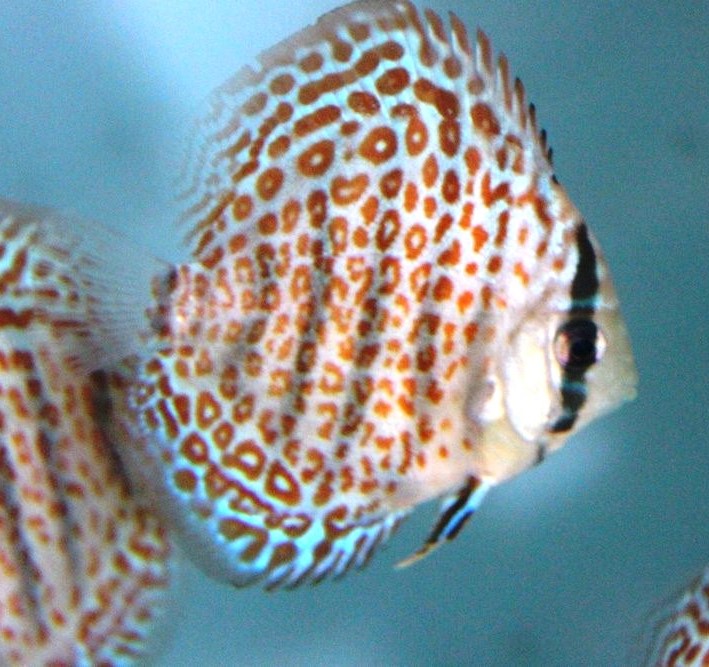
This article describes in detail how to artificially raise Discus Fish.
Step 1: Give the parents a 2 inch PVC pipe 14-16″ long to let them spawn on. You can attached it to a 4 inch converter to give it a base. pH must be below 7 with 6.5 being ideal and water used throughout this process must be soft (around 200 ppm TDS).
Step 2: Make sure that the males is fertilizing the eggs, otherwise any attempt is futile. You will see making a breeding run after the female lays eggs.
Step 3: Wait four hours after spawning is finished. This gives the eggs time to fully fertilize.
Step 4: Using a 2 gallon glass beaker, fill it with the tank water the parents (& eggs) are in. Put the PVC in the jar (quickly and calmly). Then put the beaker into a 5-10 gallon tank. So you will have the eggs inside a beaker which is inside a 5-10 gallon tank.
Step 5: Then quickly remove the PCV pie and put it into the beaker filled with water at 84f (50w heater is required). Also put a small Sponge Filter in the tank and turn it on. This will keep the jar warm and allow the tank to cycle.
Step 6: Turn the air flow in the Sponge Filter on so that there is a good current in the tank (don’t blast the eggs though). The current will help keep the eggs from growing fungus.
Step 7: Add three to six drops of methylene blue. Other people may recommend more, but I believe that it may cause fry loss. Six or less drops works well and allows you to observe the eggs.
Step 8: They will begin hatching (if they are fertile and the correct water parameters/hardness/uS